Choosing windows for your home isn’t just a purchase; it’s a 30-year commitment to your family’s comfort, security, and financial well-being.
In 2026, the landscape has shifted. With stricter energy codes (like the updated Part L or Energy Star 7.0) and the rise of “Passive House” standards, the old “cheap vs. expensive” debate is dead.
As a structural consultant, I’ve seen $50,000 window installations fail within three years due to poor material choice. This guide will ensure that doesn’t happen to you.
| Your Priority | The Winner | Why? |
|---|---|---|
| Max Thermal Insulation | uPVC | Natural multi-chamber insulation; lowest U-values. |
| Ultra-Large Openings | Aluminum | Higher "Moment of Inertia"; supports massive glass. |
| Lowest Upfront Cost | uPVC | Mass-produced efficiency; 30-50% cheaper. |
| Modern Aesthetics | Aluminum | Slimmer sightlines; "invisible" frame designs. |
| Coastal Sustainability | Marine-Grade Aluminum | Resists salt-spray better than standard PVC foils. |
Looking for more specific details on uPVC? If you have already decided that uPVC might be the right fit for your budget and climate, you may want to explore our [comprehensive guide to vinyl windows] to see all available styles, colors, and customization options before diving into the technical comparison below.
The 2026 Material Science Revolution
Beyond "Plastic": The Rise of High-Stability uPVC
Modern uPVC (unplasticized Polyvinyl Chloride) is no longer the brittle plastic of the 90s. In 2026, we use Class A profiles with a wall thickness of 3.0mm.
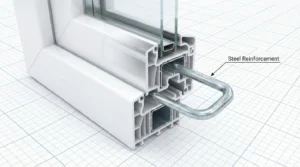
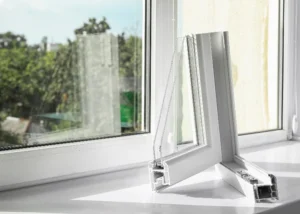
These frames utilize complex multi-chambered interiors that act as thermal buffers, preventing heat from escaping your home in winter and entering in summer.

The Engineering Marvel: Polyamide Thermal Breaks
Aluminum is a natural heat conductor, which used to be its downfall. However, 2026 “Thermal Break” technology has changed the game entirely.
By inserting a wide Polyamide strip (a low-conductivity material) between the inner and outer aluminum frames, we “break” the heat path, reaching U-values once thought impossible for metal.
Data-Driven Performance Comparison
Thermal Transmittance (The U-Value Battle)
In energy efficiency, lower is better. Most 2026 building codes now target a whole-window $U_w$ value of under 1.2 W/m²K.
Standard double-glazed uPVC naturally sits at 0.9 to 1.1, while high-end thermal break aluminum achieves 1.1 to 1.4. If your goal is a “Net Zero” home, uPVC remains the thermal king.
The Expansion Coefficient (Why Windows Whistle)
Here is a technical truth often miss: uPVC expands and contracts at 3 times the rate of aluminum.
In a 3-meter wide opening, PVC can move up to 6mm between seasons. If the installer doesn’t account for this “thermal dance,” the frame will bow, the seals will snap, and you will hear that dreaded winter whistle.


Real-World Case Studies: 2024-2025 Lessons
Case A: The "Lake Tahoe" Alpine Residence
The Challenge: Extreme snow, sub-zero temperatures, and high UV exposure at altitude. The Choice: High-performance uPVC with triple glazing.
The Result: The natural insulation of the PVC prevented frame “sweating” (condensation), which often rots interior trim in alpine conditions. The energy savings paid for the window upgrade in just 4 years.
Case B: The "Miami Coastal" Modern Villa
The Challenge: Hurricane-force winds, high salt-spray corrosion, and floor-to-ceiling glass requirements. The Choice: Structural Aluminum with Marine-Grade Powder Coating.
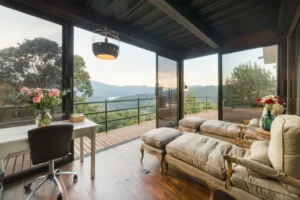
The Result: Aluminum’s structural integrity allowed for 3.5-meter tall sliding doors with a frame width of only 20mm. A PVC frame of this size would have required massive steel inserts, ruining the view.
Professional Tools & Materials Checklist
If you are a DIYer or overseeing a contractor, ensure these specific items are on-site. Using the wrong sealant can ruin a $20,000 investment.
Low-Modulus Neutral Cure Silicone: Essential for aluminum; acetic silicones can cause “pitting” corrosion on the metal surface.
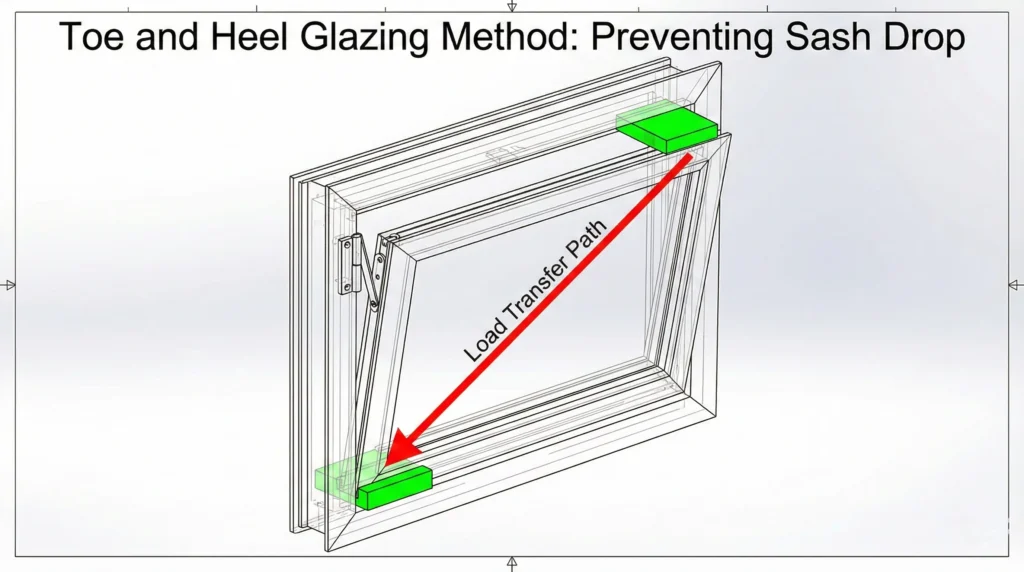
H-Level Plastic Shims: Unlike wood, these won’t rot or compress over time. They ensure the weight of the glass is distributed to the building structure.
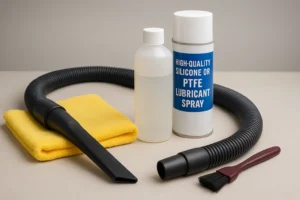
Non-Petroleum Gasket Lubricant: Used to keep the EPDM seals supple. Petroleum-based sprays will cause PVC gaskets to swell and perish.
Thermal Imaging Camera: A 2026 pro-standard tool used after installation to check for “cold bridges” or air leaks around the perimeter.
Expanding Foam (Low-Expansion Type): Fills the gap between the frame and wall without warping the frame.
The "Master-Class" Installation Steps
Step 1: The Perimeter Gap Strategy
For PVC, allow a 10mm gap; for Aluminum, 5mm is usually sufficient. This gap is not a mistake—it’s the “breathing room” required for material expansion.
Step 2: The "Toe and Heel" Method
This is the most critical step for operable windows. You must brace the glass diagonally inside the sash so the weight is carried by the hinge-side bottom corner.
Step 3: Triple-Seal Weatherproofing
Internal: Airtight tape to prevent moisture from the house entering the wall cavity.
Middle: Low-expansion foam for thermal and acoustic insulation.
External: High-grade silicone and a “drip-loop” backer rod.
Troubleshooting & Maintenance Principles
Problem: "My Aluminum Windows are Sweating"
The Diagnosis: This usually means the “Thermal Break” is being bypassed by a metal screw or the frame is touching the outer brickwork directly (Cold Bridging). The Fix: Ensure there is a non-conductive barrier between the window frame and the building’s structural skin.
Problem: "The PVC Door is Hard to Lock in Summer"
The Diagnosis: Heat expansion. The door has grown taller than the frame, causing the locking bolts (mushroom heads) to misalign. The Fix: Use an Allen key to adjust the “3D Hinges.” Most 2026 PVC windows allow for lateral, vertical, and compression adjustments.
Common Mistakes to Avoid (The Consultant’s Warning)
Mistake 1: Choosing Dark PVC in High-Sun Areas. Dark grey or black PVC absorbs immense heat. Without massive internal steel reinforcement, they will warp (the “Banana Effect”).
Mistake 2: Ignoring the “Marine Grade” Requirement. If you are within 5km of the sea, standard aluminum powder coating will peel. Insist on Qualicoat Class 2 or 25-micron anodizing.
Mistake 3: Poor Drainage Design. All windows let some water in. If your installer blocks the “Weep Holes” (the slots on the bottom outside), the water will rot your floorboards.
2026 Comparison Table: The Technical Deep Dive
| Technical Metric | High-End uPVC (Steel Reinforced) | Thermal Break Aluminum (75mm+) |
|---|---|---|
| Air Tightness | Class 4 (Top Tier) | Class 4 (Top Tier) |
| Water Tightness | E900 (Excellent) | E1200 (Superior for High-Rise) |
| Wind Resistance | Class C3/B3 | Class C5 (Hurricane Level) |
| Acoustic Reduction | 35dB - 48dB | 38dB - 50dB |
| Security Standard | PAS 24 / RC2 | PAS 24 / RC3 (Harder to pry) |
| Life Expectancy | 25 - 35 Years | 45 - 60 Years |
FAQs
-
Will PVC windows turn yellow in the sun?
Not in 2026. High-quality uPVC uses Titanium Dioxide as a UV stabilizer. Look for "Class S" (Severe Climate) certification to ensure color stability for 20+ years.
-
Is PVC cheaper than Aluminum in 2026?
Yes, generally 30%–50% cheaper. However, Aluminum can increase your home’s resale value more significantly. To see a full breakdown of what impacts the price of a standard installation, check out our checklist of essential vinyl window price.
-
Which material is better for highway noise?
Aluminum is slightly better due to its higher density, but the glass specification (Laminated vs. Standard) matters 10x more than the frame material for soundproofing.
-
Is the extra cost of Aluminum worth the ROI?
If you plan to sell your home in a high-end market, yes. Aluminum windows are perceived as a "premium" feature and can increase property valuation by 5-8%.
-
Can I change the color later?
Aluminum can be professionally resprayed on-site, but it's expensive. PVC cannot be easily painted once installed—the paint will eventually flake due to the material's expansion.
-
What is a "Flush Sash" PVC window?
This is a 2026 design trend where the opening part of the window sits "flush" with the frame, mimicking the flat, clean look of traditional timber or modern aluminum.
-
Are there fire-rated versions of these windows?
Aluminum is naturally fire-resistant and preferred in "Bushfire Attack Level" (BAL) zones. PVC will melt and release toxic fumes at high temperatures unless specifically treated.
-
How do I know if the "Thermal Break" is high quality?
Ask for the Isothermal Map of the profile. A good break ensures the "0-degree line" stays in the center of the Polyamide strip, not on the inner aluminum face.
-
Does "Triple Glazing" work better with PVC or Aluminum?
Aluminum handles the weight of triple glazing better. A triple-glazed sash can weigh over 80kg; PVC frames often require extra "heavy-duty" hinges to prevent sagging.
-
What is "Alu-Clad"?
The hybrid solution. A timber or PVC interior for warmth and an aluminum exterior for weather protection. It is the most expensive but highest-performing option.
-
Why are my new windows vibrating during high winds?
This is usually a sign of "Under-Specification." The frame isn't rigid enough for the wind load of your specific location. This is why we calculate the Moment of Inertia before buying.
-
How often should I clean the tracks?
Twice a year. Use a vacuum to remove grit. If grit stays in the track, it acts like sandpaper on the rollers, destroying them in months.
-
Is condensation inside the glass a frame problem?
No, that’s a "failed unit." The seal between the glass panes has broken. It has nothing to do with PVC vs. Aluminum, though frame vibration can hasten this failure.
-
Which is easier to repair after a break-in?
Aluminum. PVC frames often shatter or crack under heavy leverage, requiring a full replacement. Aluminum can often be bent back and refinished.
-
Are slimline aluminum windows less energy-efficient?
Technically, yes, because glass is usually a better insulator than even thermal-break aluminum. More glass and less frame often results in a better overall $U_w$ value.
-
What is the most common installation failure?
Missing the Sill Dam. If the end of the window sill isn't properly sealed against the brickwork, water will bypass the window and go straight into your cavity wall.
Final Expert Verdict: 2026 Choice
The Emotional Choice: If you want a cozy, warm, “cottage” feel with zero maintenance and the best energy bills, uPVC is your soulmate.
The Architectural Choice: If you want a home that looks like it belongs in Architectural Digest, with walls of glass that disappear into the view, Aluminum is the only answer.
Next Step: Measure your largest opening. If it exceeds 2.5 meters in height or width, start your search with Aluminum. If all openings are standard, get three quotes for uPVC and compare the U-values.
If you need a quote for doors and windows made of specific materials, please contact us, and I will provide you with a direct factory price quote.