Understanding Window Frame Toxicity: What You Need to Know
The question of whether window frames pose health risks isn’t simple. Different materials have different chemical profiles, manufacturing processes, and long-term off-gassing behaviors. Some materials are inherently safe but become problematic through treatments, coatings, or sealants applied during production or installation.
Before we dive into specific materials, understand this fundamental principle: the toxicity of a window frame depends on three factors:
- The base material itself – what it’s made from
- Additives and treatments – preservatives, stabilizers, UV protectors, and fire retardants
- Installation components – sealants, foams, tapes, and flashing
Many homeowners focus exclusively on the frame material while overlooking the installation chemicals that can actually be more problematic for indoor air quality.
Thermally Broken Aluminum Windows – The Top Choice for Chemical Safety
Aluminum window frames have earned their reputation as the safest option for chemically sensitive individuals, but not all aluminum windows are created equal.
Why aluminum works well: The metal itself is inert. It doesn’t off-gas, doesn’t require chemical preservatives, and doesn’t degrade into airborne particles that can be inhaled. For someone with Multiple Chemical Sensitivity (MCS), this is invaluable.
However, there’s a critical detail most articles miss: the thermal break. Aluminum conducts heat efficiently, which means untreated aluminum frames become ice cold in winter and scorching hot in summer. This is why modern aluminum windows incorporate a thermal break – a strip of material placed between the interior and exterior portions of the frame.
What’s in that thermal break? This is where quality matters tremendously. High-end thermally broken aluminum windows use polyamide or specialized polymer thermal breaks that are fully encapsulated. Because the thermal break is sealed between metal components, any potential off-gassing is contained. Budget options sometimes use less stable materials, so always verify what your manufacturer uses.
Another advantage of aluminum is its durability. Aluminum frames last 40-60 years with minimal maintenance. They don’t rot, warp, or support mold growth – all significant concerns for health-conscious homeowners.
The trade-off: Aluminum windows typically cost more than vinyl and less than high-end wood. They also have higher thermal conductivity than fiberglass or wood, though modern thermal break technology has largely solved this issue.

Wood Windows – Beauty with Hidden Complications
Wood windows offer undeniable aesthetic appeal and natural thermal insulation. Wood is a renewable resource and, in its natural state, contains no synthetic chemicals. But here’s where the story gets complicated.
The preservation problem: Untreated wood exposed to moisture will rot, warp, and grow mold. To prevent this, wood windows receive treatments that can include:
- Fungicides and biocides to prevent rot
- Water repellents to prevent moisture absorption
- Primers and paints that may contain VOCs
- Wood preservatives like copper-based compounds
The specific chemicals used vary dramatically between manufacturers. Some use low-toxicity options like borate treatments, while others rely on more aggressive chemical preservatives. If you’re considering wood windows, you must ask your manufacturer exactly what preservatives and treatments are used.
Accoya wood – a better alternative: One option gaining traction in the healthy building community is Accoya wood. This is radiata pine modified through acetylation, a process that changes the wood’s cellular structure to make it resistant to rot and decay without adding toxic chemicals. Accoya is treated with acetic anhydride (essentially vinegar), and the result is wood that’s dimensionally stable, rot-resistant, and free from added biocides.
The maintenance reality: Even the best wood windows require ongoing maintenance. Paint or stain must be reapplied every 5-10 years, and each application introduces new chemicals into your home environment. For those with chemical sensitivities, this ongoing exposure can be problematic.
Fiberglass Windows – The Middle Ground
Fiberglass window frames have gained popularity as a low-maintenance, energy-efficient option. The material itself is glass fibers embedded in a resin matrix. When properly manufactured and fully cured, fiberglass is stable and low-off-gassing.
The curing question: This is the detail most articles skip. Fiberglass frames require a curing process after manufacturing. If this curing is incomplete when the windows are installed, residual volatile compounds can off-gas into your home. Reputable manufacturers ensure complete curing before shipping, but not all do.
What’s in the resin? The resin used in fiberglass frames is typically polyester, vinyl ester, or epoxy. Quality varies significantly. Higher-end fiberglass windows use resins that are fully reacted and stable, while budget options may use formulations with higher residual monomer content.
Surface coatings matter: Fiberglass frames are usually painted or coated at the factory. These coatings can be a source of VOCs. Look for manufacturers that use low-VOC, water-based coatings rather than solvent-based alternatives.
The thermal performance advantage: Fiberglass has excellent thermal properties. The frames don’t conduct heat like aluminum, so they maintain comfortable temperatures and resist condensation. This is important for health because condensation on window frames can promote mold growth.
Vinyl Windows – Separating Fact from Fear
The question “are vinyl windows toxic” comes up constantly in healthy home discussions, and the answer requires nuance. Vinyl (PVC) windows have been the subject of considerable controversy, and understanding the full picture helps you make an informed decision.
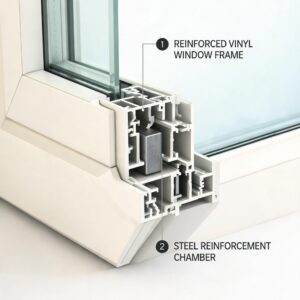
What vinyl actually is: PVC (polyvinyl chloride) is a plastic made from ethylene and chlorine. The base material itself is stable and inert once manufactured. The concerns about vinyl toxicity center on three areas: manufacturing emissions, additives used in the formulation, and end-of-life disposal.
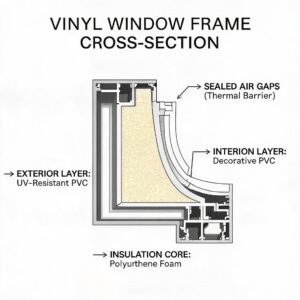
Additives and stabilizers: This is where the real health considerations lie. Pure PVC is brittle and degrades when exposed to sunlight. To make it suitable for window frames, manufacturers add:
- Stabilizers – historically lead-based, though modern formulations have largely moved away from lead
- UV protectors – to prevent degradation from sunlight
- Impact modifiers – to improve durability
- Pigments – for color
The shift away from lead stabilizers has been significant. Today, most reputable vinyl window manufacturers use calcium-zinc or organotin stabilizers that are far safer. However, not all manufacturers have made this transition equally. When evaluating vinyl windows, always ask about stabilizer chemistry.
Off-gassing concerns: Properly manufactured vinyl window frames have minimal off-gassing once installed. The manufacturing process drives off volatile compounds, and the finished product is stable. However, there are two situations where off-gassing can occur:
- Poor quality manufacturing – if the formulation isn’t properly processed, residual monomers can remain
- Thermal degradation – if vinyl is exposed to very high temperatures (above 160°F/70°C), it can begin to break down
For typical residential applications, properly manufactured vinyl windows from reputable brands pose minimal off-gassing risk. The concern is more about the manufacturing and disposal phases than the in-home use phase.
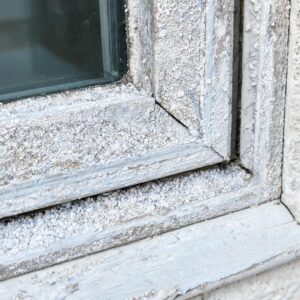
The durability factor: Quality vinyl windows last 20-40 years. They don’t rot, don’t require painting, and resist moisture well. Lower-quality vinyl, however, can become brittle over time, especially in direct sunlight, leading to cracking and degradation.
Cost advantage: Vinyl remains the most affordable window frame option, which is why it dominates the residential market. For budget-conscious homeowners who still want a healthy product, quality vinyl windows can be an excellent choice.
Comparing Window Frame Materials – What Matters Most for Health
When comparing window frames for a healthy home, consider these factors in order of importance:
Chemical Off-Gassing Potential
- Aluminum (thermally broken): Lowest – metal is inert
- Fiberglass (fully cured): Low – stable resin matrix
- Vinyl (quality manufactured): Low to moderate – depends on stabilizers
- Wood (treated): Variable – depends entirely on treatments used
Moisture and Mold Resistance
- ألومنيوم: Excellent – metal doesn’t support mold
- الألياف الزجاجية: Excellent – non-porous surface
- الفينيل: Good – but can trap moisture between frame and wall if not properly installed
- الخشب: Poor to fair – requires careful sealing and maintenance
Long-Term Durability
- ألومنيوم: 40-60 years
- الألياف الزجاجية: 30-50 years
- الفينيل: 20-40 years (quality dependent)
- الخشب: 20-50 years (maintenance dependent)
Thermal Performance
- الألياف الزجاجية: Excellent – naturally insulating
- الخشب: Good – natural insulator
- الفينيل: Good – hollow chambers provide insulation
- ألومنيوم: Fair to good – depends on thermal break quality
The Installation Factor – Often Overlooked but Critical
Here’s something most articles about non-toxic windows completely miss: the installation materials can be more problematic than the windows themselves.
Spray foam insulation: Many installers use spray polyurethane foam around window frames to seal gaps. This foam can off-gas isocyanates and other volatile compounds during and after installation. For chemically sensitive individuals, this can be a major problem.
Alternatives to spray foam:
- Compressed backer rod with low-VOC caulk
- Sheep’s wool insulation
- Pre-compressed expanding tape (but verify the adhesive)
- Mineral wool with careful sealing
Window caulks and sealants: Standard construction caulks often contain high levels of VOCs. Look for:
- Water-based acrylic caulks with low VOC content
- Silicone caulks that are fully cured before occupancy
- Butyl tape for flashing applications
Flashing tapes: Many flashing tapes use aggressive adhesives that can off-gas. Some manufacturers now offer low-VOC alternatives specifically designed for healthy building projects.
For those seeking lead-free uPVC window profiles, it’s essential to verify that the installation materials also meet your health requirements.
Glass and Coatings – What’s in the Window Itself
The frame isn’t the only component that matters. The glass and its coatings can also affect indoor air quality.
Low-E coatings: These microscopically thin metallic coatings reflect infrared heat while allowing visible light to pass through. The coatings themselves are inert once applied and sealed. They’re applied to glass during manufacturing and pose no off-gassing concern.
Gas fills: Many energy-efficient windows use argon or krypton gas between panes. These are inert, non-toxic gases that occur naturally in the atmosphere. They’re completely safe and don’t affect indoor air quality.
Window films: Aftermarket window films can be a different story. Some films use adhesives that off-gas VOCs. If you’re applying film to existing windows, choose a brand that specifically states low-VOC or no-VOC adhesives.
Making Your Decision – Practical Recommendations
After considering all the factors, here’s my recommendation for different situations:
For chemically sensitive individuals (MCS):
Thermally broken aluminum windows are the gold standard. The inert metal frame eliminates off-gassing concerns, and modern thermal breaks are fully encapsulated. Pair these with careful installation using low-VOC materials.
For general healthy home construction:
Quality fiberglass windows offer an excellent balance of health, performance, and durability. Verify that the manufacturer fully cures the frames before shipping and uses low-VOC coatings.
For budget-conscious healthy homes:
Quality vinyl windows from reputable manufacturers using calcium-zinc stabilizers can be a good option. Focus on the vinyl window off-gassing safety by choosing brands that prioritize stabilizer quality and proper manufacturing processes.
For traditional aesthetics:
If you love the look of wood, consider Accoya or other acetylated wood products that avoid toxic preservatives. Be prepared for ongoing maintenance and careful installation.
Final Thoughts on Window Frame Selection
The healthiest window frame is one that meets your specific needs while minimizing chemical exposure throughout its lifecycle. No single material is perfect for everyone, but understanding the trade-offs helps you make an informed decision.
Remember that the window industry has made significant strides in reducing toxic additives and improving manufacturing processes. Today’s quality windows are far safer than those produced even a decade ago. The key is knowing what questions to ask and working with manufacturers who prioritize health alongside performance.
When you’re ready to make a decision, request detailed material safety data sheets from manufacturers, ask about stabilizer chemistry, and don’t forget to plan your installation approach. The window itself is only part of the equation – how it’s installed matters just as much for your indoor air quality.
Frequently Asked Questions About Window Frame Toxicity
Q: Do vinyl windows off-gas VOCs?
A: Quality vinyl windows from reputable manufacturers have minimal off-gassing once properly manufactured and installed. The concern is primarily about additives like stabilizers, which modern formulations have improved significantly. Always verify what stabilizers are used in the vinyl formulation.
Q: How long do I need to air out new windows before moving in?
A: For most quality windows, the off-gassing period is short – typically a few days to a week. However, the installation materials (foams, caulks, adhesives) often require longer airing out periods, sometimes 2-4 weeks. Plan your installation timeline accordingly.
Q: Are aluminum windows safe for people with chemical sensitivities?
A: Yes, thermally broken aluminum windows are generally considered the safest option for chemically sensitive individuals because the metal frame is inert and doesn’t off-gas.
Q: What’s the best non-toxic window frame material?
A: Thermally broken aluminum is the top choice for maximum chemical safety. Fiberglass is a close second for those who want better thermal performance. Both options avoid the chemical treatments required by wood and the stabilizer concerns of vinyl.
Q: Can I make my existing windows less toxic?
A: If you have existing windows, focus on the installation seals and caulking. Replace any deteriorating caulk with low-VOC alternatives. Ensure proper ventilation around windows. For vinyl windows showing signs of degradation, replacement may be the safest option.
Q: Do window screens contain toxic materials?
A: Most window screens are made from fiberglass or aluminum mesh, both of which are stable and low-toxicity. The frame material of the screen matters more than the mesh itself. Avoid screens with PVC-coated frames if you’re concerned about chemical exposure.
Q: How do I verify a manufacturer’s claims about non-toxic windows?
A: Request material safety data sheets (MSDS) for all components. Ask specifically about stabilizers in vinyl, preservatives in wood, and resin chemistry in fiberglass. Reputable manufacturers will provide this information. If a manufacturer is unwilling to disclose their materials, consider that a red flag.