When homeowners begin researching window replacements, one question surfaces more than any other: are vinyl windows actually worth the investment? After decades in the window manufacturing industry, I’ve watched vinyl evolve from a budget-friendly alternative into the dominant material choice for residential windows across North America. Yet misconceptions persist, and many homeowners struggle to separate marketing hype from genuine performance data.
This guide provides an honest, comprehensive look at vinyl windows—not just the surface-level pros and cons you’ll find on most contractor blogs, but the real-world performance factors, installation considerations, and long-term value calculations that actually matter when you’re spending thousands of dollars on home improvements.
What Makes Vinyl Windows Different From Other Materials
Before diving into advantages and drawbacks, it helps to understand what vinyl windows actually are. Vinyl window frames are manufactured from polyvinyl chloride (PVC), a durable thermoplastic that has been used in construction for decades. Unlike wood, which requires ongoing maintenance, or aluminum, which conducts heat and cold readily, vinyl offers inherent properties that make it uniquely suited for window applications.
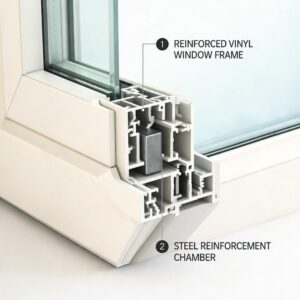
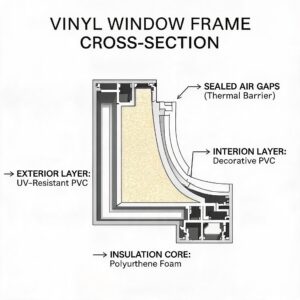
Modern vinyl windows are not the flimsy, cheap-looking products that gave the material a bad reputation in the 1980s. Today’s formulations include impact modifiers, UV stabilizers, and thermal additives that dramatically improve performance and longevity. The extrusion process allows for multi-chambered designs that trap air and create effective thermal breaks—something early single-chamber vinyl windows simply couldn’t achieve.

The Advantages of Vinyl Windows: What Manufacturers Know That Most Articles Don’t Tell You
Superior Thermal Performance Through Design
The most significant advantage of vinyl windows lies in their thermal performance. The multi-chambered extrusion design creates dead air spaces that resist heat transfer far better than solid materials. When you compare a quality vinyl window to an aluminum frame of similar dimensions, the vinyl frame can be up to 1,800 times more thermally efficient. This isn’t marketing exaggeration—it’s basic physics.
What many articles overlook is that vinyl’s thermal performance depends heavily on the number of chambers in the frame design. Budget windows might have three chambers, while premium products feature five or seven chambers with additional foam insulation injected into key cavities. The difference in energy efficiency between these tiers can be substantial, particularly in climates with extreme temperature swings.
Moisture Resistance That Eliminates Rot Concerns
Wood windows, even when properly maintained, remain vulnerable to moisture damage. Vinyl windows simply cannot rot. This isn’t a claim about durability—it’s a material reality. PVC does not provide a food source for mold, mildew, or wood-destroying organisms. For homeowners in humid climates or areas with frequent rainfall, this characteristic alone can justify choosing vinyl over wood.
However, there’s a nuance that most articles miss: while the vinyl itself won’t rot, improper installation can still lead to moisture problems. Water can penetrate behind the frame and cause damage to surrounding wall structures, sheathing, or framing lumber. The window material is only one piece of the moisture management puzzle.
Cost-Effectiveness That Goes Beyond Initial Price
The upfront cost of vinyl windows typically ranges 30-50% less than wood or fiberglass alternatives. But the true value proposition extends far beyond the initial purchase price. Vinyl windows require virtually no maintenance—no painting, staining, or sealing. Over a 20-year period, the cumulative maintenance costs for wood windows can easily exceed the original purchase price. When you factor in these avoided costs, vinyl often emerges as the more economical choice over the full lifecycle of the product.
Noise Reduction Capabilities
Many homeowners don’t realize that vinyl windows can actually outperform other materials in sound attenuation. The combination of multi-chambered frames, proper weatherstripping, and laminated or double-pane glass creates effective sound barriers. For homes near busy roads, airports, or urban centers, quality vinyl windows with acoustic glass packages can reduce exterior noise by 40-50 decibels—a dramatic improvement in quality of life.
The Disadvantages: Honest Assessment of Vinyl Window Limitations
Thermal Expansion and Contraction
Vinyl expands and contracts with temperature changes more than wood or fiberglass. This is a genuine concern that manufacturers address through proper engineering, but it’s worth understanding. In extreme climates, a vinyl window frame can expand or contract by up to 1/8 inch over a 100-degree temperature swing. Poorly designed windows or improper installation can lead to seal failures, air leaks, or operational issues.
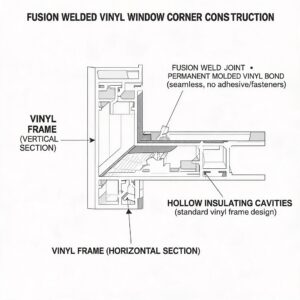
Quality manufacturers account for this by using reinforced corners, proper clearances in frame design, and installation methods that allow for movement without compromising the seal. This is one area where cutting corners on price almost always leads to problems.
Color and Finish Limitations
While vinyl windows are available in a range of colors, the finish options are more limited than wood or aluminum. Dark colors absorb more heat, which can cause warping or distortion in vinyl frames. Manufacturers have developed capstock technologies and co-extrusion processes that improve color stability, but very dark colors remain challenging for vinyl.
If your home design requires specific custom colors or a wood-grain appearance, vinyl may not deliver the aesthetic you’re seeking. For most homeowners, the standard white, beige, and bronze options work well, but it’s worth considering your design preferences honestly.
Structural Strength Comparisons
Vinyl is not as strong as wood or fiberglass on a pound-for-pound basis. Large window openings or heavy glass configurations may require reinforced vinyl frames or alternative materials. This doesn’t mean vinyl can’t handle large windows—many manufacturers offer steel-reinforced vinyl frames that provide excellent structural integrity. But it does mean that very large or unusually shaped windows may perform better in other materials.
Environmental Considerations
The environmental impact of vinyl windows deserves honest discussion. PVC production involves chlorine chemistry and energy-intensive manufacturing processes. However, the full lifecycle picture is more nuanced than many critics suggest. Vinyl windows last 20-40 years with minimal maintenance, provide excellent energy efficiency that reduces heating and cooling demands, and are increasingly recyclable at end of life.
When comparing the environmental impact of vinyl windows, you need to consider the complete picture: raw material extraction, manufacturing energy, transportation weight, installation waste, operational energy savings over decades, and end-of-life disposal or recycling. When you run these numbers honestly, vinyl often performs better than wood (which requires ongoing chemical treatments) and aluminum (which has extremely high manufacturing energy requirements).
For homeowners specifically concerned about the environmental impact of vinyl windows, it’s worth noting that many manufacturers now use recycled content in their vinyl formulations and operate closed-loop manufacturing systems that capture and reuse production waste.
Vinyl vs Composite Windows: Understanding the Real Differences
Homeowners frequently ask about the differences between vinyl and composite windows. Composite windows typically combine wood fibers or other materials with plastic resins to create a hybrid product. The vinyl vs composite windows pros and cons reveal important distinctions that affect both performance and cost.
Composite windows generally offer better paintability and can be field-finished if needed. They also tend to have slightly better dimensional stability in extreme temperatures. However, composite windows typically cost 20-40% more than comparable vinyl products and may not offer the same long-term moisture resistance since the wood fiber content can still be vulnerable if the protective coating is compromised.
Vinyl windows maintain their advantage in moisture resistance, cost-effectiveness, and overall energy efficiency. Composite windows win in aesthetic flexibility and repairability. For most homeowners, the choice comes down to whether the aesthetic benefits of composite justify the additional cost and potential long-term maintenance requirements.
Installation Quality: The Factor That Makes or Breaks Performance
No discussion of vinyl window pros and cons is complete without addressing installation. A premium vinyl window installed poorly will perform worse than a budget window installed correctly. This is the single most overlooked factor in window replacement decisions.
Proper vinyl window installation includes:
- Correct flashing and waterproofing at all penetration points
- Proper shimming to ensure square and plumb installation
- Appropriate fastening that allows for thermal movement
- Complete air sealing around the frame
- Correct gap filling with low-expansion foam (not the high-expansion stuff that can bow frames)
Many of the negative reviews about vinyl windows—drafts, condensation, operational difficulties—trace back to installation errors rather than material defects. When evaluating contractors, ask specifically about their installation methods for vinyl windows. A contractor who treats vinyl window installation the same as wood window installation likely doesn’t understand the material’s unique requirements.
Cost Breakdown: What You’re Actually Paying For
Understanding the cost structure of vinyl windows helps you make informed purchasing decisions. Here’s what typical pricing includes:
Frame Material Quality: Budget windows ($150-300 per window) typically use thinner vinyl with fewer chambers and basic hardware. Mid-range windows ($300-600) offer thicker profiles, better weatherstripping, and improved hardware. Premium windows ($600-1,200+) feature multi-chambered frames, foam insulation, reinforced sashes, and top-tier hardware.
Glass Packages: Standard double-pane glass adds minimal cost. Low-E coatings add $30-60 per window. Argon or krypton gas fills add $20-50. Triple-pane glass can add $100-300 per window but provides significant energy benefits in cold climates.
Installation Labor: Professional installation typically adds $150-400 per window depending on your location, the complexity of the installation, and whether any structural repairs are needed.
Removal and Disposal: Removing old windows and disposing of them properly adds $25-75 per window.
When you’re comparing quotes, make sure you’re comparing apples to apples. A low quote might use thinner vinyl, basic glass, and minimal installation work. A higher quote might include premium materials, better glass, and comprehensive installation with proper flashing and sealing.
Long-Term Value and Lifespan Expectations
Quality vinyl windows installed correctly should last 20-40 years with minimal maintenance. The primary failure points are typically:
- Seal failures in the insulated glass units (fogging between panes)
- Hardware wear (cranks, locks, hinges)
- Weatherstripping deterioration
Most reputable manufacturers offer transferable warranties covering the frame for life and the glass units for 10-20 years. Hardware and weatherstripping typically carry shorter warranties but are relatively inexpensive to replace.
The key to maximizing lifespan is choosing quality products and ensuring proper installation. A $300 window installed perfectly will likely outperform a $600 window installed poorly.
Die richtige Wahl für Ihr Haus treffen
Vinyl windows represent an excellent choice for most homeowners, particularly those seeking energy efficiency, low maintenance, and reasonable upfront costs. They’re especially well-suited for:
- Homes in moderate to cold climates where thermal performance matters
- Budget-conscious renovations where cost-effectiveness is priority
- Homes where maintenance accessibility is limited (second stories, difficult-to-reach windows)
- Coastal or high-humidity areas where moisture resistance is critical
Vinyl may not be the best choice for:
- Historic homes requiring period-appropriate materials
- Very large or unusually shaped window openings
- Homes where specific custom colors are essential
- Ultra-premium renovations where budget is not a constraint
Häufig gestellte Fragen zu Kunststofffenstern
Do vinyl windows fade or discolor over time?
Quality vinyl windows include UV stabilizers that prevent significant fading for 20+ years. White vinyl is most color-stable. Darker colors may show some fading over time, particularly in direct sunlight exposure.
Können Kunststofffenster gestrichen werden?
Most manufacturers do not recommend painting vinyl windows because the paint may not adhere properly and can void the warranty. If you need color options, look for factory-finished vinyl or consider alternative materials.
Are vinyl windows energy efficient enough for cold climates?
Yes, quality vinyl windows with proper glass packages perform excellently in cold climates. Look for windows with U-factors below 0.30 for cold climate applications, and consider triple-pane glass for extreme northern climates.
Do vinyl windows expand and cause problems?
Quality windows are engineered to accommodate thermal expansion. Problems arise with cheap windows or improper installation that doesn’t allow for movement. This is why choosing quality products and experienced installers matters.
How do I clean vinyl windows?
Mild soap and water work well. Avoid abrasive cleaners or solvents that can damage the surface. For stubborn dirt, a mixture of vinegar and water is effective and safe.
Can vinyl windows be repaired if damaged?
Minor scratches can sometimes be buffed out. Cracked frames typically require replacement. Glass units can be replaced individually without replacing the entire window. Hardware components are usually replaceable.
What’s the warranty on vinyl windows?
Quality manufacturers offer lifetime warranties on frames and 10-20 year warranties on glass units. Always read the warranty carefully—some cover only materials, while others include labor for replacement.
Are vinyl windows recyclable?
Yes, vinyl windows can be recycled at end of life. Many manufacturers now offer recycling programs for old windows. The PVC material can be ground and reused in new products.
Do vinyl windows look cheap?
Modern vinyl windows have improved dramatically in appearance. Quality products feature clean lines, consistent color, and profiles that closely match traditional wood windows. The “cheap” look is associated with low-end products, not the category as a whole.
How do vinyl windows compare to fiberglass?
Fiberglass windows offer slightly better dimensional stability and can be painted, but they cost 30-50% more than comparable vinyl windows. Vinyl typically offers better energy efficiency due to its multi-chambered design and lower thermal conductivity.