If you own an older home and recently invested in vinyl replacement windows—or you’re considering them—you’ve likely asked yourself whether you should keep those old storm windows in place. It’s a question that comes up constantly in homeowner forums, contractor discussions, and even among window manufacturers themselves. And the answers you’ll find online are often contradictory, incomplete, or just plain wrong.
As a manufacturer with decades of experience in the window industry, we’ve seen every combination imaginable: storm windows over single-pane originals, storms over double-hungs, and yes, storm windows installed over modern vinyl units. Some of these setups work reasonably well. Others create problems that cost homeowners thousands in hidden damage and reduced performance.
This guide will give you the complete picture—not just whether you can install storm windows over vinyl, but whether you should, what alternatives exist, and how to make the best decision for your specific home.
Understanding the Core Question
The short answer is yes, you can physically install storm windows over vinyl windows. But the more important question is whether doing so makes sense from a performance, durability, and cost perspective. And for most modern vinyl windows, the answer is no.
To understand why, we need to look at how window technology has evolved and what storm windows were originally designed to accomplish.
Why Storm Windows Existed in the First Place
Storm windows became popular in the early to mid-20th century when most homes had single-pane wood windows. These original windows were drafty, conducted heat readily, and offered almost no insulation value. A single pane of glass has an R-value of about 1, meaning it provides minimal resistance to heat transfer.
Storm windows added a second layer of glass with an air gap between them. This created a crude but effective insulating barrier. The trapped air reduced heat loss in winter and helped block some solar gain in summer. For homes with original single-pane windows, adding storms was one of the most cost-effective energy upgrades available.
But here’s the critical point: modern vinyl windows already incorporate double or triple glazing, low-E coatings, argon gas fills, and thermally broken frames. They achieve R-values between 3 and 7 or higher. Adding a storm window on top of this system is like putting a second winter coat on someone who’s already wearing a high-performance parka—it might not hurt, but it’s unnecessary and can actually cause problems.
The Real Problems with Storm Windows Over Vinyl
When homeowners ask “can you put storm windows over vinyl windows,” they’re usually hoping for extra insulation or protection. But the reality is more complicated. Let’s break down the specific issues we’ve observed in the field.
Heat Buildup and Window Deformation
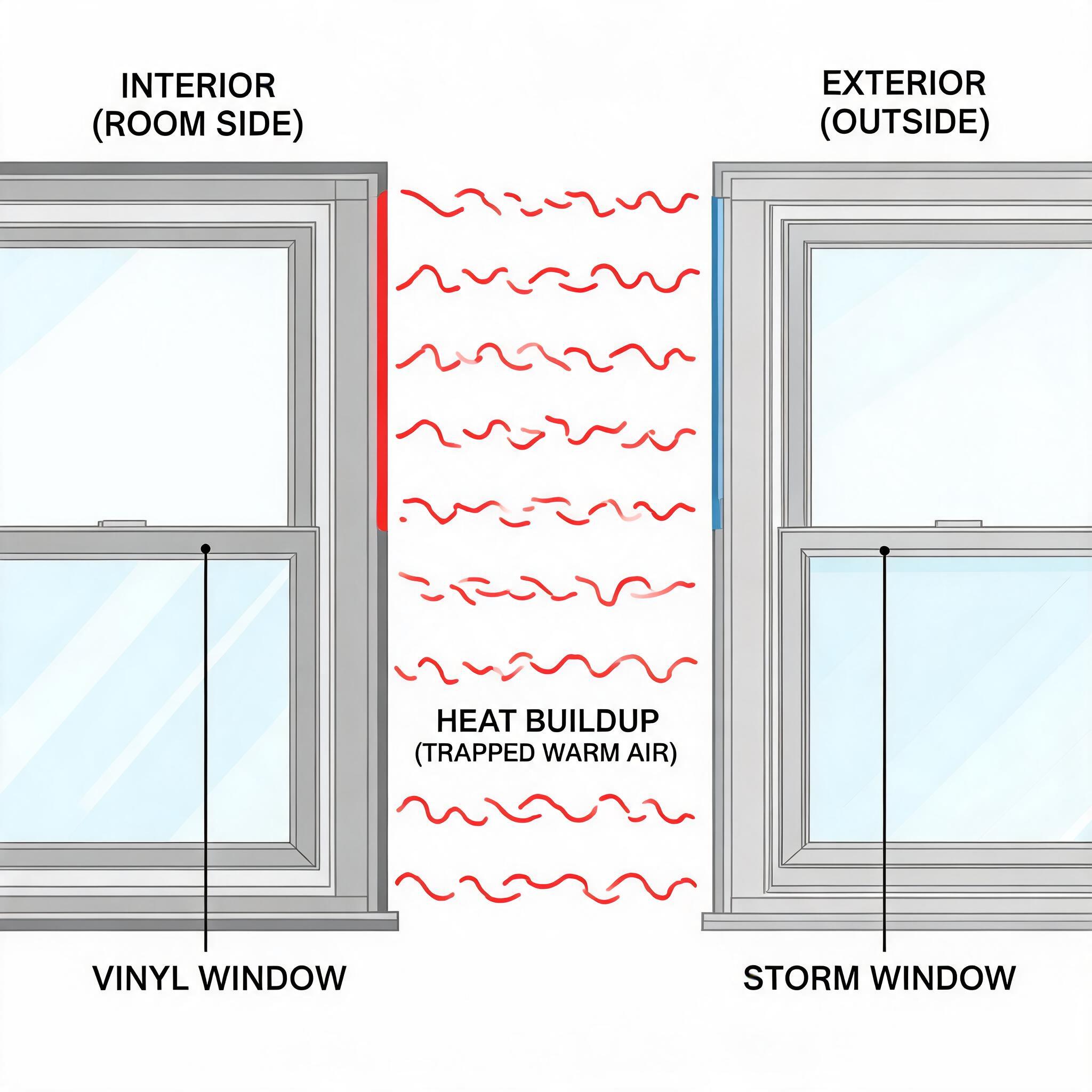
This is the most serious concern, and it’s one that many online discussions overlook. Modern vinyl windows are engineered with specific temperature tolerances. The frames are designed to handle normal solar exposure and interior-to-exterior temperature differentials. But when you add a storm window, you create a greenhouse effect in the space between the two windows.
On a sunny winter day, the air trapped between your vinyl window and the storm can reach temperatures well above 150 degrees Fahrenheit. Vinyl begins to soften and deform at around 160 to 170 degrees. Over time, repeated exposure to these elevated temperatures causes the window frame to warp, sag, or bow. This leads to air leaks, difficulty opening and closing the window, and eventual failure of the seal between the glass and the frame.
We’ve seen cases where homeowners reported their vinyl windows “suddenly stopped working” after a few years, only to discover the frames had distorted from trapped heat behind storm windows. The damage is often invisible until it becomes severe, and by then, the window needs replacement.
Reduced Energy Efficiency
This sounds counterintuitive—how could adding an extra layer of glass reduce efficiency? But it happens for several reasons.
First, many modern vinyl windows use low-E coatings that reflect infrared heat. These coatings are carefully calibrated to work with the window’s specific air gap and gas fill. Adding a storm window changes the thermal dynamics of the assembly. The low-E coating may end up reflecting heat back into the trapped air space rather than into your home, actually reducing the window’s overall performance.
Second, the air gap between the vinyl window and the storm is typically too large to provide optimal insulation. The ideal gap for thermal performance is around half an inch to three-quarters of an inch. Storm windows installed over existing windows often create gaps of one to four inches, which allows convection currents to form. Warm air rises, cool air sinks, and you end up with continuous air movement that transfers heat more efficiently than a properly sized gap would.
Third, condensation becomes a serious issue. The temperature differential between the interior window surface and the exterior storm can cause moisture to accumulate in the space between them. This moisture promotes mold growth, wood rot in the window frame, and deterioration of seals and gaskets.
Cleaning and Maintenance Challenges
Anyone who has tried to clean windows with storm windows installed knows this pain. You have to remove the storm, clean both sides of the interior window, then clean both sides of the storm, then reinstall everything. For second-story windows, this becomes a safety hazard as well as a chore.
More importantly, the space between the windows becomes a collection point for dust, pollen, dead insects, and spider webs. Over time, this debris can trap moisture against the window frame, accelerating deterioration. And because the space is difficult to access, many homeowners simply ignore it until problems become visible from the inside.
What the Industry Actually Recommends
As a manufacturer, we don’t recommend installing storm windows over modern vinyl replacement windows. The risks of heat deformation, reduced efficiency, and moisture damage outweigh any potential benefits for the vast majority of installations.
Instead, we recommend focusing on proper installation of the vinyl windows themselves. A well-installed vinyl window with proper flashing, insulation, and sealing will outperform a poorly installed window with storm windows added as a band-aid.
The Aluminum Capping Alternative
One of the most effective solutions for older homes is aluminum capping. This involves covering the exterior wood trim around the window with formed aluminum cladding. The aluminum is custom-bent to match the existing trim profile and is available in a wide range of colors.
Aluminum capping serves several purposes:
- It protects the wood trim from moisture and UV damage
- It eliminates the need for painting and regular maintenance
- It creates a clean, finished appearance that matches modern vinyl windows
- It allows the vinyl window to breathe and operate as designed
This is the solution that many experienced contractors recommend, and it’s the approach we suggest for homeowners who want to maintain the traditional look of their home while benefiting from modern window technology.
When Storm Windows Might Make Sense
There are a few specific scenarios where storm windows over vinyl could be acceptable, though they remain uncommon:
- Historic district requirements: Some historic preservation boards require the retention of original storm windows for aesthetic consistency. In these cases, you may have no choice but to keep them. However, you should work with a window professional to ensure proper ventilation and moisture management.
- Extreme climate conditions: In areas with very high wind loads or frequent severe storms, exterior storm windows can provide additional impact protection. However, purpose-built impact-resistant vinyl windows are a better solution.
- Temporary situations: If you’re planning to replace windows in stages, keeping storms over older windows until the full replacement is complete can be a reasonable short-term measure.
For the vast majority of homeowners, though, the best approach is to remove storm windows when installing new vinyl units and focus on proper installation and maintenance of the new windows themselves.
Prendre la bonne décision pour votre maison
If you’re currently trying to decide whether to keep your storm windows, here’s a practical decision framework:
Assess Your Current Windows
Start by determining what type of windows you have. If your home still has original single-pane wood windows, storm windows provide meaningful benefits. In this case, you might consider keeping the storms or upgrading to vinyl replacement windows and removing the storms.
If you already have double-pane vinyl windows, the storms are likely doing more harm than good. Remove them and address any air leakage or insulation issues with the vinyl windows themselves.
Check for Existing Damage
Before making any changes, inspect the area around your windows for signs of moisture damage, rot, or mold. If you find problems, they may be caused or worsened by the storm windows. Address these issues before installing new windows or removing storms.
Consider Professional Installation
When installing new vinyl windows, work with a qualified contractor who understands the specific requirements of your home’s construction. Proper flashing, insulation, and sealing are far more important than adding storm windows.
For homeowners looking for high-quality vinyl windows designed for long-term performance, exploring options from reputable manufacturers is essential. You can find a range of uPVC windows for sale that are engineered to provide excellent thermal performance without the need for additional storm protection.
Installation Best Practices for Vinyl Windows Without Storms
If you decide to remove your storm windows, proper installation of your vinyl windows becomes even more critical. Here are the key factors that determine long-term performance:
Proper Flashing and Water Management
The most common cause of window failure is water intrusion. Your window installation should include a continuous waterproof membrane that directs water away from the window opening. This is especially important in older homes where the original framing may have settled or shifted over time.
Insulation and Air Sealing
The gap between the window frame and the rough opening should be filled with low-expansion foam insulation. This prevents air leakage and provides additional thermal performance. Do not use standard expanding foam, which can bow the window frame.
Exterior Trim and Capping
As mentioned earlier, aluminum capping provides excellent protection for exterior wood trim. It also creates a clean transition between the window frame and the surrounding wall surface. When properly installed, capping eliminates the need for painting and significantly extends the life of the window installation.
Common Questions About Storm Windows and Vinyl Windows
Will storm windows help with noise reduction?
Storm windows can provide some additional sound dampening, but modern double-pane vinyl windows with laminated glass or different glass thicknesses are far more effective. If noise is a concern, invest in acoustic-rated windows rather than relying on storms.
Can I install storm windows on the inside instead of the outside?
Interior storm windows exist, but they present their own challenges with condensation and aesthetics. They’re generally not recommended for vinyl windows.
Do storm windows void the warranty on my vinyl windows?
Many manufacturers explicitly state that installing storm windows over their products voids the warranty. Always check your warranty documentation before adding storms.
Are there any benefits to keeping storm windows for historic homes?
In historic districts where exterior appearance must be preserved, storm windows may be required. Work with your local preservation board to find solutions that balance historical accuracy with modern performance.
What about installing exterior storm windows on uPVC windows specifically?
The same principles apply to all vinyl windows, including uPVC. The risk of heat deformation and reduced efficiency exists regardless of the specific vinyl formulation. For homeowners considering this setup, we recommend reviewing options for installing exterior storm windows on uPVC with a qualified professional who understands the specific risks.
How do I know if my current storm windows are causing damage?
Look for signs of moisture between the storm and the window, difficulty opening or closing the window, visible warping of the window frame, or condensation that doesn’t clear. If you notice any of these, the storms should be removed.
What’s the best alternative to storm windows for energy efficiency?
Properly installed double or triple-pane vinyl windows with low-E coatings and argon gas fill provide superior performance. Adding exterior shading, such as awnings or solar screens, can further reduce solar heat gain without the risks associated with storm windows.
Final Thoughts
The question “can you put storm windows over vinyl windows” has a simple technical answer but a complex practical one. While it’s physically possible, it’s rarely advisable. The risks of heat deformation, reduced efficiency, moisture damage, and maintenance headaches far outweigh any marginal benefits for modern vinyl windows.
If you’re looking to improve your home’s energy performance, focus on proper window selection and installation rather than adding unnecessary layers. A well-chosen and properly installed vinyl window will outperform a compromised setup with storm windows every time.
For homeowners with older homes who want to maintain a traditional appearance while benefiting from modern technology, aluminum capping offers an excellent compromise. It protects the wood trim, eliminates maintenance, and allows your vinyl windows to perform as designed.
Ultimately, the best window system is one that’s designed to work together as a complete assembly. Modern vinyl windows are engineered to provide excellent thermal performance, durability, and ease of use on their own. Trust the engineering, invest in quality installation, and let your windows do the job they were designed to do.