
Summary Box: The 60-Second Professional Verdict
| Key Metric | Specification / Expert Advice |
|---|---|
| Can you paint them? | Yes, but it requires a specialized solvent-based 2K coating. |
| Primary Risk | Thermal Expansion. Dark colors on white frames can cause warping. |
| Adhesion Secret | Surface Activation. Standard DIY paint will peel without a promoter. |
| Estimated Cost | DIY: $150 – $300 |
| Time Investment | 3–5 Days (70% of which is cleaning and masking). |
| Key Warning | Never paint the rubber gaskets (seals) or internal weep holes. |
The "Can I vs. Should I" Dilemma: A Professional Perspective
Walking down a suburban street, you might notice vinyl windows that look tired, yellowed, or simply “out of fashion.” As a structural consultant, I am frequently asked: “Can I just paint these to match my new charcoal siding?” The answer is a resounding yes, but the “how” is governed by chemistry and physics, not just aesthetics.
Painting is often the most cost-effective way to boost curb appeal without the $15,000 price tag of a full replacement. However, uPVC (unplasticized Polyvinyl Chloride) is a high-performance polymer designed to repel almost everything. To succeed, you must transform the surface from a non-stick shield into a receptive foundation.

The Science of Failure: Why Standard Paints Peel
Low Surface Energy and Molecular Bonding
uPVC is a “low surface energy” material, much like a Teflon pan. Standard water-based acrylics sit on the surface rather than “biting” into the polymer. When the temperature changes, the paint stays rigid while the frame moves, leading to catastrophic flaking.
The Thermal Expansion Trap
White vinyl windows are designed to reflect the sun’s infrared energy. If you apply a dark “Fashion Black” or “Deep Navy” without IR-reflective technology, the frame absorbs heat. Internal temperatures can exceed 75°C (167°F), reaching the “Vicat Softening Point” where the plastic warps permanently.
LRV (Light Reflectance Value) Matters
In the industry, we measure paint by its LRV. A value of 100 is pure white; 0 is absolute black. For a standard PVC Window, we recommend choosing a color with an LRV of 55 or higher to ensure structural safety.
Decision Matrix: Evaluating Your Windows’ Health
Before investing in expensive coatings, you must perform a “Structural Audit.” Painting a dead window is a waste of resources.
The 3-Point Health Check
Seal Integrity: Are the EPDM gaskets still soft, or have they turned brittle?
Corner Welds: Are there hairline cracks in the mitered corners of the uPVC Windows?
Operation: Does the sash glide smoothly, or is the internal galvanized steel reinforcement rusted and expanding?
Comparison Table: Restoration vs. Replacement
| Factor | Painting / Restoration | Full Window Replacement |
|---|---|---|
| Average Cost | $120 - $200 per opening | $600 - $1,200 per opening |
| Timeline | 1 week for a whole house | 2-4 days for installation |
| Energy Efficiency | No change (Aesthetic only) | Improves U-Value significantly |
| Warranty | Usually voids original warranty | 10–25 year new warranty |
| ROI | High (Instant curb appeal) | Long-term (Energy savings) |
The Professional Tool & Materials Checklist
Do not go to a local hardware store and buy “All-Purpose Paint.” You need a system designed for high-performance polymers.
Preparation Equipment
Industrial Degreaser (Sugar Soap): To remove years of acidic rain and smog.
Isopropyl Alcohol (99% Concentration): For the final “chemical wipe” before the primer.
Fine Abrasive Pads (Maroon Scotch-Brite): Better than sandpaper for getting into the grooves of uPVC Windows.
Precision Masking Tape: Use a “Washi” style tape to prevent paint bleed on the glass.
The Coating Technology
Adhesion Promoter (Clear): A chemical primer that melts slightly into the PVC surface.
2K Solvent-Based Topcoat: 2K means “two-component”—you mix a hardener into the paint.
HVLP (High Volume Low Pressure) Sprayer: Essential for a factory-smooth finish without brush marks.

The 7-Step Professional Protocol: How to Paint uPVC Windows
Step 1: Deep Cleaning and De-greasing
You cannot paint over “invisible” grease. Scrub every millimeter of the PVC Window frame using a stiff brush and degreaser. Pay special attention to the corners where finger oils accumulate from opening the sash.
Step 2: Mechanical Abrasion (Keying)
The goal is not to remove the plastic, but to “de-gloss” it. Lightly scuff the surface until the factory shine is gone. If you miss a spot, the paint will eventually peel from that exact location.
Step 3: Strategic Masking and Protection
This is the most critical step. * Mask the glass, leaving a 0.5mm gap to ensure the paint “caps” the seal.
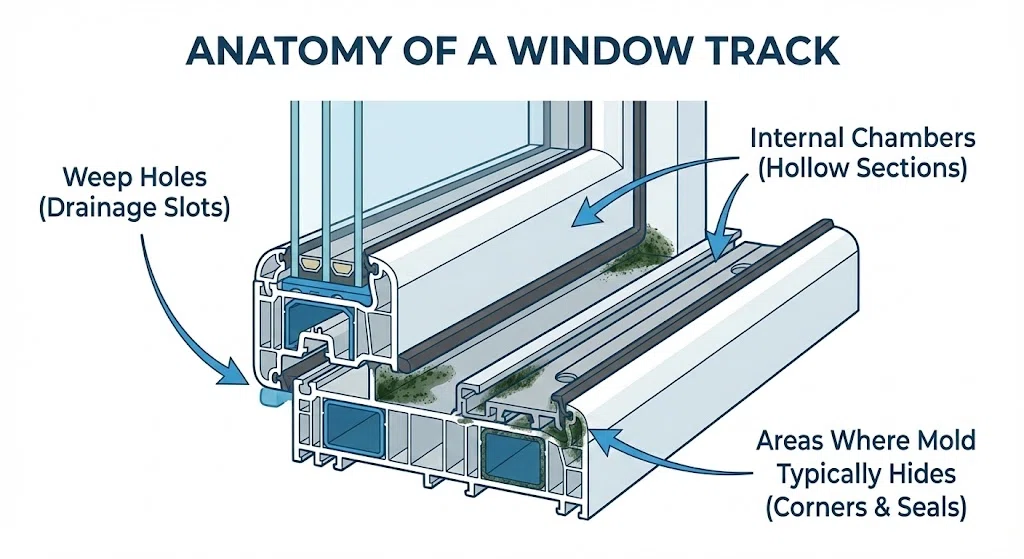
Cover the weep holes (drainage slots) with light tape to prevent blockage.
Warning: Never paint over the rubber seals; it causes them to stick and tear.
Step 4: Chemical Surface Activation
Wipe the entire frame with Isopropyl Alcohol. The cloth should come away clean. This step removes any remaining dust and prepares the molecular bond for the PVC Window primer.
Step 5: The "Mist" Coat (Priming)
Apply a very thin, translucent layer of adhesion promoter. It should look slightly wet but not dripping. Wait the exact “flash-off” time specified on the can (usually 10–15 minutes).
Step 6: Application of the Topcoat
If using an HVLP sprayer, keep the gun 6–8 inches from the uPVC Windows. Use a “cross-hatch” pattern (horizontal then vertical). Apply two thin coats rather than one thick one to avoid “orange peel” texture.
Step 7: The Critical Curing Phase
Paint might feel “dry to the touch” in 30 minutes, but it hasn’t “cured.” Avoid closing the window for at least 24 hours. Full chemical hardness for a PVC Window coating often takes 7–14 days.
Fixing Mistakes: How to Remove Paint from PVC Window
Sometimes, accidents happen—a drip on the glass or a botched DIY attempt. Handling these requires a delicate touch to avoid melting the plastic.
Removing Fresh Drips and Spills
If the paint is still wet, use a cloth dampened with Isopropyl Alcohol. Do not use “Thinner” or “Acetone” as these can permanently dull the white finish of vinyl windows
How to Clean Paint Off PVC Window Frames (Dried)
For dried paint on the frame, you have two options:
Mechanical: Use a plastic razor blade (not metal!) to gently flake the paint off.
Chemical: Use a “PVC-Safe” paint stripper. Apply it with a Q-tip only to the affected area.

Structural Repair: How to Fix Hole in PVC Window Frame
Old alarm sensors, curtain rods, or accidental impacts often leave holes. Standard wood filler or silicone will shrink and fail.
The Resin Injection Method
Clean: Remove any loose plastic burrs with a utility knife.
Fill: Use a two-part PVC repair resin. This is essentially “liquid uPVC.”
Level: Once hard, sand the area flush using 600-grit sandpaper.
Polish: Use a PVC cream cleaner to restore the gloss to match the rest of the uPVC Windows.
Hygiene & Health: How to Get Mold Off PVC Windows
Black mold (Aspergillus) loves the condensation that forms on window tracks. This isn’t just an aesthetic issue; it’s a respiratory hazard.
The Non-Toxic Eradication Strategy
Vacuum: Remove loose dust and spores from the uPVC Windows tracks first.
The Solution: Mix 1 part white vinegar with 4 parts water.
The Scrub: Use an old toothbrush to reach into the “European Style” multi-chamber tracks.
The Seal: Apply a drop of silicone lubricant to the gaskets to prevent future spore adhesion.
Regional Climate Considerations: Where You Live Matters
Coastal Environments (High Salt)
If you live within 5 miles of the ocean, salt spray acts as an abrasive. You must rinse your uPVC Windows with fresh water once a month. Paint in these areas must be “Marine Grade” to prevent micro-cracking.
Desert and High-UV Zones
In places like Arizona or Australia, UV intensity is the primary enemy. Ensure your paint contains HALS (Hindered Amine Light Stabilizers). These molecules sacrifice themselves to protect the color from fading into a chalky mess.
Mistakes to Avoid: The "Wall of Shame"
Painting in the Sun: If the frame is hot, the solvent evaporates too fast.
Blocking Weep Holes: If water can’t drain out, the internal steel reinforcement will rust.
Painting the Weatherstripping: This will cause the window to whistle when the wind blows.
Using a “One-Coat” Product: There is no such thing as a professional one-coat finish on plastic.
Troubleshooting Common Issues
| Symptom | Probable Cause | The Fix |
|---|---|---|
| Orange Peel Texture | Paint viscosity too high or air pressure too low. | Sand back with 800-grit and re-spray with more thinner. |
| Fisheye (Small Circles) | Silicone contamination (from old sealants). | Wipe with "Anti-Silicone" fluid and re-coat. |
| Flaking/Peeling | Poor cleaning or no adhesion promoter used. | Complete strip-down and restart the prep phase. |
| Sticky Windows | Painting over old rubber seals or gaskets. | Replace the gaskets; they are now chemically compromised. |
FAQs
-
1. Can I use a roller?
I don't recommend it. Rollers leave a "stipple" texture that doesn't look like a real uPVC Windows factory finish.
-
2. Is it better to paint in the morning or evening?
Early morning, after the dew has evaporated but before the sun is at its peak.
-
3. What if my windows are already "chalky"?
This is actually a good sign for painting. The "chalk" means the surface is already open for a bond.
-
4. Can I paint the handles?
Technically yes, but it’s better to buy new ones. They are cheap and paint on moving parts wears off.
-
5. Will the paint smell for a long time?
Solvent-based paints smell for 24–48 hours. Ensure you have cross-ventilation.
-
6. Do I need to remove the window from the wall?
No. Professional sprayers always paint them in-situ (installed in the wall).
-
7. How do I match the color for a repair?
Use a "RAL" color chart. Most window paints follow the RAL standard (e.g., Anthracite is RAL 7016).
-
8. Can I paint "Woodgrain" textured PVC?
Yes! The texture actually helps the paint adhere even better.
-
9. What happens if I paint over the silicone sealant?
The paint will crack. Silicone is flexible; paint is rigid. Always replace the silicone after painting.
-
10. How long will the finish last?
A professional 2K job on a PVC Window lasts 10–15 years.
-
11. Is it cheaper to spray or brush?
Brushing is cheaper in materials, but spraying is 5x faster and looks 10x better.
-
12. Can I use car paint?
Many "Acrylic Enamel" car paints work well, but they lack the flexibility needed for window expansion.
-
13. Does the paint protect against UV?
Yes, high-quality window paint acts as a "sunscreen" for the underlying plastic.
-
14. What if it rains 2 hours after I paint?
If it’s solvent-based, it will likely be fine. If it's water-based, you will have a "wash-off" disaster.
-
15. How do I fix a scratch from a ladder?
Use a "Touch-up Pen" filled with the same batch of paint used for the original job.
-
16. Why is my paint bubbling?
Usually, it's moisture trapped in the plastic. Never paint immediately after a heavy rainstorm.
-
17. Can I change from Black back to White?
Yes, but it requires 3-4 coats to fully hide the dark pigment.
-
18. Will the paint stick to the glass?
Yes, it sticks very well, which is why your masking must be perfect.
-
19. Is uPVC painting environmentally friendly?
Yes. It prevents thousands of tons of plastic from going to landfills by extending their life.
-
20. Can I use a heat gun to dry the paint?
No. You risk melting the window's internal structure.
-
21. Do I need a respirator?
Yes. Solvent fumes are toxic. Use a mask with "Organic Vapor" (A2) cartridges.
-
22. How do I clean my windows after they are painted?
Use only warm soapy water. Never use a pressure washer.
-
23. Can I paint the interior?
Yes, but ensure you use a "Low-VOC" version for indoor air quality.
-
24. What is the most popular color in 2026?
"Aged Bronze" and "Sage Green" are overtaking Anthracite Grey this year.
-
25. Can I do this myself if I’ve never painted?
If you are patient and good at masking, yes. If you are a "hurry-up" person, hire a pro.
The Final Expert Tip: A Structural Legacy
As we conclude this guide, remember that your windows are the “eyes” of your home. Taking the time to understand the PVC Window material you are working with is the difference between a project that adds value and one that creates a headache.
If you are unsure about the color, paint a small “test patch” on the inside of the frame that is hidden when the window is closed. Check it after 48 hours for adhesion by trying to scratch it with your fingernail. If it stays firm, you are ready to transform your home.








