
The Ultimate Guide to Choosing Your Windows: Wood, Vinyl, or the Perfect Hybrid?
Choosing new windows for your home is a significant decision that impacts not just curb appeal, but also comfort, energy bills, and long-term maintenance. For decades, homeowners have been caught in the classic debate: the timeless beauty of wood versus the modern practicality of vinyl windows. It often feels like a choice between aesthetics and efficiency. But what if you didn’t have to choose? This comprehensive guide delves deep into the pros, cons, and crucial data behind each option, and introduces a sophisticated third choice that is redefining the market.
Wood Windows: Unmatched Tradition and Warmth
Wood has been the material of choice for centuries, offering a classic look that many find irreplaceable. Its natural grain and warmth add character and value that synthetic materials struggle to replicate.
Key Advantages:
Aesthetic Appeal & Customization: Wood offers unparalleled beauty and can be sanded, stained, or painted in any color to match your home’s exact style, from historic Victorian to modern farmhouse.
Structural Strength: It is a robust material that can support larger panes of glass and more intricate window designs, such as true divided lites.
Natural Insulator: Wood has inherent insulating properties, which can contribute to a home’s overall thermal performance when the window is properly constructed.
Important Considerations:
Maintenance Demands: This is the most significant drawback. Exterior wood surfaces require regular painting or staining (every 3-7 years) to protect against moisture, rot, and insect damage.
Cost: High-quality wood windows are typically the most expensive option upfront, both in material and installation.
Potential for Warping: In climates with extreme humidity fluctuations, wood can expand and contract, potentially leading to drafts or operational issues if not meticulously maintained.
Vinyl (UPVC) Windows: The Champion of Efficiency and Ease
When vinyl windows burst onto the scene, they revolutionized the industry by offering a compelling, low-maintenance alternative. Made from UPVC (unplasticized polyvinyl chloride), these units are engineered for performance.
Key Advantages:
Minimal Maintenance: They never need painting. A simple wash with soap and water keeps them looking new, saving significant time and money over decades.
Energy Efficiency: Multi-chambered vinyl frames and advanced weatherstripping create excellent thermal barriers. Many models feature fusion-welded corners that prevent air infiltration better than mechanically fastened wood frames.
Cost-Effectiveness: UPVC windows generally offer the lowest initial investment, making them an attractive option for budget-conscious homeowners or large-scale projects.
Moisture Resistance: Unlike wood, vinyl will not rot, warp, or corrode from exposure to rain and humidity.
Important Considerations:
Limited Aesthetics & Color: While technology has improved, vinyl can sometimes have a less premium look than wood. Color options are often limited to whites, beiges, and grays, and darker colors can be susceptible to heat-induced warping.
Non-Repairable: If a vinyl frame cracks or fades significantly, it usually cannot be repaired and must be replaced.
Expansion and Contraction: Like all materials, vinyl expands with heat and contracts with cold. High-quality windows are designed to accommodate this movement, but cheaper versions may develop gaps over time.
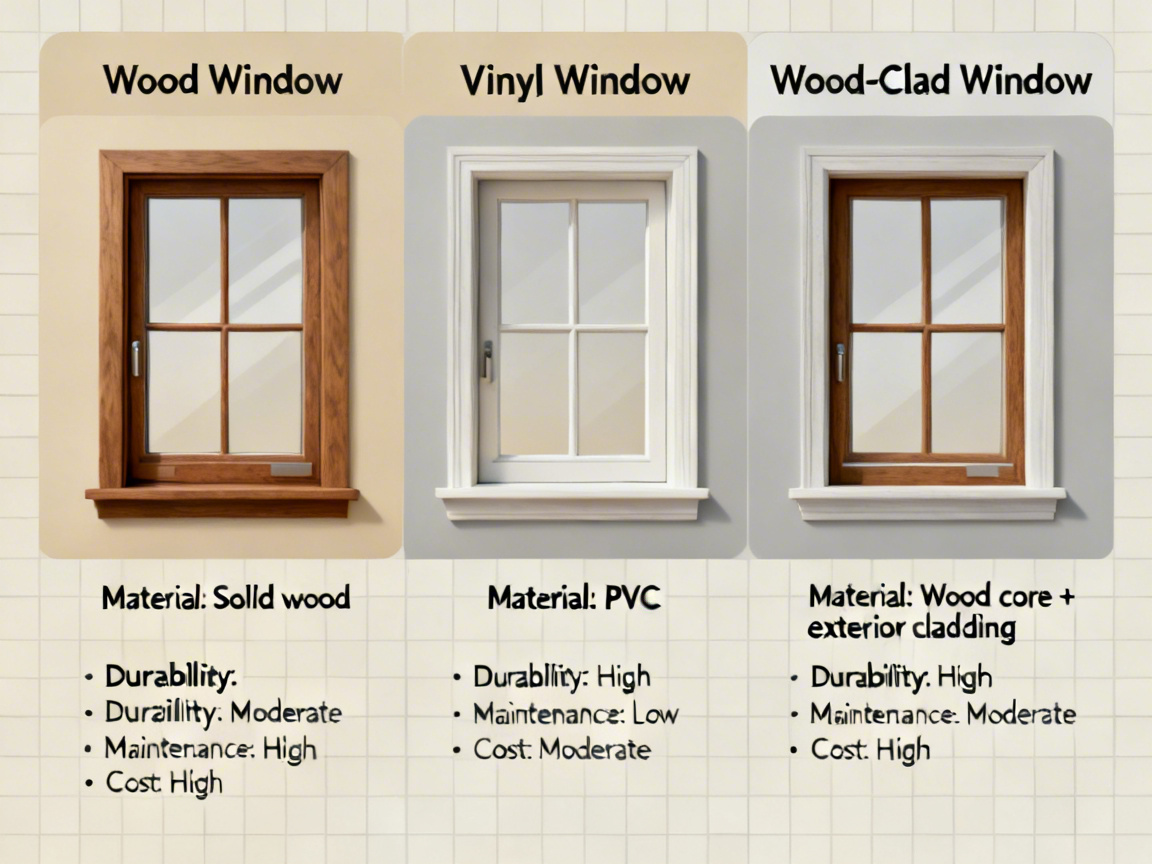
Head-to-Head: A Quick-Reference Comparison Table
| Feature | Wood Windows | Vinyl (UPVC) Windows |
| :— | :— | :— |
| Initial Cost | Highest | Most Affordable |
| Long-Term Maintenance | High (Regular painting/staining) | Very Low (Just cleaning) |
| Energy Efficiency | Good (Varies with construction) | Excellent (Engineered for thermal breaks) |
| Aesthetic Customization | Unlimited (Any paint/stain color) | Limited (Pre-finished colors) |
| Lifespan Potential | 30+ years (With meticulous upkeep) | 20-40 years (Varies by quality) |
| Environmental Impact | Renewable resource, but requires treatment | Recyclable, but petroleum-based production |
| Best For | Historic homes, luxury projects, purists | Modern homes, budget-focused projects, low-maintenance seekers |
The Hybrid Solution: Wood-Clad Windows
For those who feel torn, the market has evolved an elegant answer: wood-clad windows. This innovative design strategically combines materials to maximize benefits and minimize drawbacks.
What Are Wood-Clad Windows?
These windows feature a real wood interior, giving you the warm, customizable feel inside your home. The exterior, however, is encased in a durable, low-maintenance cladding—most commonly aluminum or a specially engineered polymer. This protects the vulnerable wood from the elements.
Why a Wood-Clad Vinyl Hybrid is a Game-Changer
Some leading manufacturers have taken this concept further by creating a wood-clad vinyl window. This hybrid uses a vinyl exterior cladding over a wood interior frame. Here’s why this combination is so effective:
Superior Exterior Durability: The vinyl cladding provides all the weather-resistant, no-paint benefits of a standard UPVC window. It won’t rot, peel, or require the constant care of an exposed wood exterior.
Authentic Interior Warmth: Inside, you enjoy the authentic look and feel of real wood, which you can stain or paint to match your interior trim and décor perfectly.
Enhanced Energy Performance: By pairing the insulating properties of wood with the engineered thermal efficiency of a vinyl shell, these hybrids often achieve exceptional U-factor and Solar Heat Gain Coefficient (SHGC) ratings.
Structural Integrity: The wood interior provides a strong, stable core that supports the window’s operation and the weight of large glass units, addressing a common concern with some all-vinyl designs.
Style and Customization Flexibility
From classic double-hungs and elegant casements to expansive picture windows, the wood-clad hybrid is available in virtually any style. The interior wood can be crafted from premium species like pine, oak, or Douglas fir, offering a level of customization that fully vinyl units cannot match.
Making the Right Choice for Your Home
Your decision should be guided by your home’s architecture, local climate, budget, and personal lifestyle.
For Historic or High-End Traditional Homes: Authentic wood windows are often the most appropriate choice to preserve architectural integrity and value, assuming you are prepared for the upkeep.
For Modern Homes & Value-Conscious Projects: A high-quality UPVC window offers outstanding performance and savings with almost no maintenance.
For the Best of Both Worlds: If you desire the interior beauty of wood but want to escape the endless cycle of exterior maintenance, a wood-clad vinyl hybrid window is arguably the optimal compromise. It’s particularly ideal for new constructions or renovations where aesthetics and long-term practicality are equally important.
Always look for ratings from the National Fenestration Rating Council (NFRC), ensure proper installation by certified professionals, and consider the window’s full-life cost, not just the purchase price.
Q&A: Your Window Replacement Questions Answered
Q: Are vinyl windows cheaper than wood in the long run?
A: Typically, yes. While wood windows have a higher upfront cost, the long-term savings come from the minimal maintenance of vinyl. You’ll save thousands over 20 years by avoiding regular painting, staining, and potential wood repair costs.
Q: Can you paint vinyl windows if you don’t like the color?
A: It’s not generally recommended. Vinyl is designed to be maintenance-free, and paint may not adhere properly, can void warranties, and may inhibit the frame’s ability to expand and contract with temperature changes, leading to damage. It’s best to choose a color you’ll be happy with long-term.
Q: Which window type is the most energy-efficient?
A: Energy efficiency depends more on the glass package (double or triple-pane, Low-E coatings, gas fills) and the quality of construction than the frame material alone. However, well-made vinyl and wood-clad hybrid windows often have an edge due to their engineered thermal breaks and superior sealing against air leakage. Always check the NFRC label for U-factor and SHGC ratings.
Q: Is a wood-clad window worth the extra cost over a standard vinyl window?
A: If you value the authentic look and feel of wood on your home’s interior, then yes. It bridges the gap between luxury and practicality. For many, the ability to have a custom-stained interior that matches their hardwood floors or trim is worth the investment, especially since they avoid the exterior maintenance of full wood windows.
Q: How long should new windows last?
A: With proper installation and care, high-quality wood windows can last 30 years or more. Good vinyl windows typically last 20-40 years. Wood-clad windows aim for a lifespan similar to or exceeding that of wood, as the protective cladding shields the structural wood core from decay.








