Are Vinyl Windows Good? The Complete Technical Guide for Homeowners and Builders
When you start researching replacement windows, you’ll quickly notice that vinyl dominates the market. It’s not by accident. Over the past three decades, vinyl windows have evolved from a budget-friendly alternative into a sophisticated building product that outperforms many traditional materials in real-world conditions. But the question remains: are vinyl windows actually good, or is this just clever marketing?
As a manufacturer with years of experience engineering window systems for diverse climates, I can tell you that the answer depends entirely on what you’re comparing them to and how they’re built. Not all vinyl windows are created equal, and understanding the technical differences between a commodity-grade window and a premium engineered system is essential before you make a purchase.
This guide will walk through the engineering, performance metrics, and real-world considerations that most articles gloss over. We’ll cover everything from thermal dynamics to installation best practices, giving you the information you need to make an informed decision.
The Engineering Behind Modern Vinyl Windows
Let’s start with the material itself. Polyvinyl chloride, or PVC, has been used in construction for decades because of its inherent resistance to moisture, insects, and rot. But early vinyl windows had problems—they warped in direct sunlight, became brittle in cold weather, and lacked the structural rigidity needed for large openings.
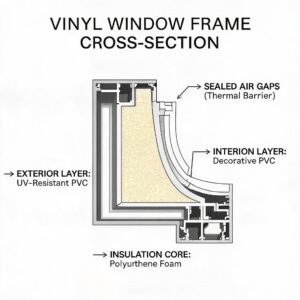
Modern vinyl windows are a completely different product. Today’s formulations include impact modifiers, UV stabilizers, and titanium dioxide pigments that prevent yellowing and degradation. The extrusion process has also improved dramatically, allowing manufacturers to create multi-chambered frames that trap air and significantly improve thermal performance.

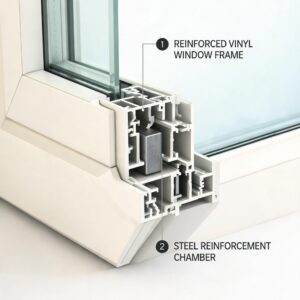
The key engineering advancement is the multi-chamber design. A single-chamber vinyl frame conducts heat relatively easily. But a frame with three, five, or even seven separate air chambers creates multiple thermal breaks, dramatically reducing heat transfer. This is where the U-factor and R-value of premium vinyl windows become genuinely impressive—top-tier products now achieve U-factors as low as 0.18, which rivals high-end fiberglass and even some aluminum-clad wood windows.
Thermal Performance: Breaking Down the Numbers
When people ask “are vinyl windows energy efficient,” they’re usually concerned about heating and cooling costs. The short answer is yes, but the long answer requires understanding how windows lose energy in the first place.
Heat transfer through windows happens in four ways: conduction through the frame and glass, convection through air movement, radiation through the glass, and air infiltration around the sash and frame. Vinyl windows address each of these pathways differently than other materials.
Conduction: Vinyl is naturally a poor conductor of heat compared to aluminum. The thermal conductivity of PVC is roughly 0.16 W/m·K, while aluminum is around 205 W/m·K. That’s a difference of more than 1,200 times. Even with thermal breaks, aluminum frames still conduct more heat than a well-designed vinyl frame with multiple chambers.
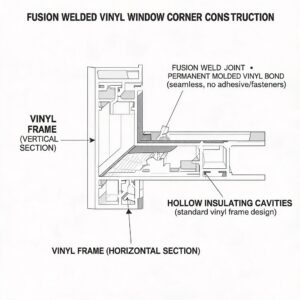
Air Infiltration: This is where many budget vinyl windows fall short. The quality of the weatherstripping, the precision of the sash fit, and the design of the frame joints all determine how much air leaks through. Premium vinyl windows use compression weatherstripping and welded corner joints to achieve air leakage rates below 0.05 cfm/ft², which is excellent.
Glazing Systems: The frame is only half the story. Modern vinyl windows can accommodate double or triple glazing, low-E coatings, argon or krypton gas fills, and warm-edge spacers. When combined with a high-performance frame, these glazing options produce whole-window U-factors that satisfy even the strictest energy codes.
Are Vinyl Windows More Energy Efficient Than Aluminum?
This comparison comes up frequently, and the answer is clear: in almost every scenario, vinyl outperforms aluminum in thermal efficiency. But let’s look at the specifics.
Standard aluminum frames without thermal breaks have U-factors around 1.0 or higher. Even thermally broken aluminum typically achieves U-factors between 0.45 and 0.60. Premium vinyl windows, by comparison, routinely achieve U-factors between 0.25 and 0.35, and top-tier products can go below 0.20.
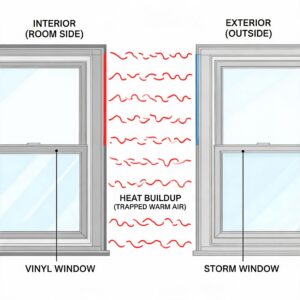
The reason is simple physics. Aluminum conducts heat rapidly, which means in winter, the interior surface of an aluminum frame becomes cold enough to cause condensation and drafts. In summer, the frame absorbs solar heat and transfers it indoors. Vinyl’s natural insulating properties prevent both of these issues.
However, there are trade-offs. Aluminum is stronger than vinyl, which means it can support larger glass areas and slimmer frame profiles. If you want floor-to-ceiling windows with minimal visible frame, aluminum or aluminum-clad products may be necessary. But for standard residential applications where thermal performance is the priority, vinyl is the clear winner.
Durability and Longevity: What the Industry Knows
One criticism of vinyl windows that persists from the early days is concerns about durability. Let’s address this directly.
Modern vinyl windows, when properly manufactured, have a service life of 20 to 40 years depending on climate and maintenance. The vinyl itself doesn’t rot, corrode, or attract termites. It doesn’t peel or require painting. The color is integral to the material, so there’s no finish to wear off.
But there are genuine concerns that buyers should understand:
Thermal Expansion: Vinyl expands and contracts with temperature changes more than aluminum or wood. This is why proper installation is critical. If a vinyl window is installed too tightly against the rough opening, temperature changes can cause the frame to bow or bind. Quality manufacturers account for this in their frame design and installation instructions.
Color Stability: Dark-colored vinyl windows absorb more solar heat, which can cause warping in extreme climates. This is why most manufacturers limit dark colors to certain frame sizes or recommend them only in moderate climates. White and light colors remain the safest choice for thermal stability.
Impact Resistance: Standard vinyl windows are not as impact-resistant as aluminum or fiberglass. In hurricane-prone areas, vinyl windows must be reinforced with metal or designed with thicker walls to meet impact codes. This is achievable but adds cost.
The Installation Factor That Most Articles Ignore
Here’s something that rarely gets discussed in consumer articles: a vinyl window is only as good as its installation. You can buy the most expensive, highest-performing window on the market, and a poor installation will destroy its performance.
The most common installation mistakes include:
– Failing to properly shim and square the frame, causing binding and air leaks
– Over-tightening fasteners, which distorts the frame
– Using expanding foam that pushes the frame out of square
– Not properly flashing the exterior, leading to water intrusion
– Compressing the window into the opening, preventing thermal expansion
A properly installed vinyl window should have a consistent gap around the frame, be perfectly plumb and level, and have all seams properly sealed and flashed. The rough opening should be slightly larger than the window to allow for expansion, and the gap should be filled with backer rod and low-expansion foam designed for windows.
Comparing Vinyl to Other Materials
To give you a complete picture, here’s how vinyl stacks up against the other major window materials across key performance categories.
Vinyl vs. Wood: Wood windows offer natural beauty and excellent insulation, but they require regular painting or staining. Wood is susceptible to rot, insect damage, and moisture absorption. Vinyl eliminates all of these maintenance requirements. However, wood windows can be repaired more easily if damaged, while vinyl often requires full replacement.
Vinyl vs. Fiberglass: Fiberglass is stronger and more dimensionally stable than vinyl. It expands and contracts less with temperature changes and can support larger glass areas. Fiberglass also accepts paint better than vinyl. However, fiberglass windows typically cost 20 to 40 percent more than comparable vinyl windows. For most homeowners, the performance difference doesn’t justify the price premium.
Vinyl vs. Aluminum: As discussed, vinyl wins on thermal performance. Aluminum wins on strength, slim profiles, and modern aesthetics. For commercial buildings or modern architectural designs, aluminum may be preferred. For residential energy efficiency, vinyl is the better choice.
Cost Considerations and Return on Investment
Vinyl windows typically cost between $300 and $800 per window installed, depending on size, style, and quality. This is significantly less than wood ($500 to $1,200) or fiberglass ($600 to $1,500). The lower upfront cost, combined with minimal maintenance requirements, makes vinyl the most cost-effective option for most homeowners.
The return on investment for vinyl window replacement varies by region and energy costs, but national averages suggest recouping 65 to 75 percent of the cost at resale. Energy savings typically range from $100 to $500 per year depending on the number of windows replaced and local climate conditions.
Environmental Considerations
Vinyl windows have an environmental story that’s more complex than many realize. The production of PVC does involve chlorine chemistry and energy-intensive processes. However, vinyl windows last decades without needing refinishing, and they are recyclable at end of life. Many manufacturers now use recycled vinyl in their products and have take-back programs for old windows.
When you consider the full lifecycle—manufacturing, transportation, installation, maintenance, and disposal—vinyl windows often have a lower environmental impact than wood windows that require frequent painting and eventual replacement due to rot. The energy savings from improved thermal performance also offset the initial manufacturing footprint within a few years.
Making the Right Choice for Your Home
The decision to choose vinyl windows comes down to your priorities. If you want the best thermal performance for your budget, minimal maintenance, and a product that will perform reliably for decades, vinyl is an excellent choice. If you need very large windows, want ultra-slim frame profiles, or require maximum impact resistance, you may need to consider other materials.
The key is to buy from a reputable manufacturer that uses quality materials and has a track record of standing behind their products. Look for windows with welded corners, multi-chambered frames, compression weatherstripping, and good warranty coverage. Avoid the cheapest options, as they often cut corners on material thickness, hardware quality, and weatherstripping.
Frequently Asked Questions
Q: Do vinyl windows eventually warp or sag?
A: Quality vinyl windows with proper reinforcement and installation should not warp or sag. The issue typically occurs with very large windows, dark colors in hot climates, or windows that were installed too tightly. Premium manufacturers use internal reinforcement for large sashes and limit dark color availability based on climate zones.
Q: Can vinyl windows be painted?
A: Vinyl windows can be painted, but it requires proper surface preparation and specific paints designed for PVC. Most manufacturers recommend against painting because it voids the warranty and can cause thermal issues if dark colors are used. If you want colored windows, it’s better to order them with integral color from the factory.
Q: How do I clean vinyl windows without damaging them?
A: Use mild soap and water with a soft cloth or sponge. Avoid abrasive cleaners, scouring pads, or solvent-based cleaners that can damage the surface. For stubborn dirt, a mixture of vinegar and water works well. Never use pressure washers directly on the window seals.
Q: What is the typical warranty on quality vinyl windows?
A: Premium vinyl windows typically come with lifetime warranties on the vinyl material and limited warranties on hardware and glass (often 10 to 20 years). Transferable warranties add value if you sell your home. Always read the fine print to understand what’s covered and what voids the warranty.
Q: Are vinyl windows suitable for historic homes?
A: This depends on local historic preservation guidelines. Some historic districts require wood windows to maintain architectural authenticity. However, many homeowners choose custom vinyl windows that replicate historic profiles and muntin patterns. Check with your local preservation board before making a decision.
Q: How do I know if a vinyl window is high quality?
A: Look for windows certified by the American Architectural Manufacturers Association (AAMA) or the National Fenestration Rating Council (NFRC). Check the wall thickness of the vinyl extrusions—premium windows use thicker material. Examine the corner welds for smooth, seamless joints. Test the hardware for smooth operation. And always check the U-factor and air leakage ratings on the NFRC label.