When you’re shopping for black windows, you’ll quickly discover that not all dark-framed windows perform the same way. The question of who makes black vinyl windows often leads homeowners down a path of confusing options, hidden costs, and long-term maintenance surprises. As a manufacturer with decades of experience in window engineering, we’ve seen the good, the bad, and the warped when it comes to black window frames.
This guide goes beyond surface-level comparisons. We’ll examine material science, real-world performance data, installation considerations, and the critical factors that determine whether your black windows will look stunning for decades or become a costly regret.
Black Vinyl Windows vs. Black Fibrex Material Windows
The market for black windows has exploded in recent years. Homeowners love the dramatic contrast, the modern aesthetic, and the way black frames make glass appear larger. But here’s what most articles won’t tell you: the material behind that black finish matters far more than the color itself.
Vinyl windows have dominated the residential market for decades because they’re affordable and energy-efficient. However, when you paint vinyl black or manufacture it in dark colors, you introduce a set of engineering challenges that many manufacturers simply haven’t solved.

Can You Get Vinyl Windows in Black?
Yes, you absolutely can. Most major window manufacturers now offer black vinyl windows as a standard option or through custom color programs. The process involves either:
- Co-extrusion: Black color is blended into the vinyl material during manufacturing
- Lamination: A black film is applied to the surface of white vinyl
- Painting: White vinyl frames are painted black after production
Each method has distinct advantages and drawbacks. Co-extrusion provides the most consistent color throughout the material, but it still doesn’t solve the fundamental heat absorption problem we’ll discuss shortly.
For homeowners seeking custom black uPVC window suppliers, the options expand significantly. Many regional manufacturers and specialty fabricators can produce black uPVC windows in virtually any size or configuration. The challenge becomes finding a supplier who understands the thermal dynamics of dark frames and has engineered their product accordingly.
Are Black Vinyl Windows More Expensive?
The short answer is yes, but the price difference varies dramatically based on the manufacturer and the method used to achieve the black finish.
Typical price premiums for black vinyl windows:
- Standard white vinyl window: $300–$600 per window (installed)
- Black vinyl window (co-extruded): $400–$800 per window
- Black vinyl window (painted or laminated): $450–$900 per window
- Premium black composite window (Fibrex or similar): $600–$1,200 per window
The premium for black windows typically ranges from 20% to 50% over white equivalents. This markup exists because dark-colored vinyl requires more precise manufacturing controls, higher-quality UV stabilizers, and often additional warranty coverage.
But here’s where the real cost analysis gets interesting. A cheaper black vinyl window that warps, fades, or fails within five years will cost you far more in replacement and installation than investing in a properly engineered black window from the start.
Are Black Vinyl Windows a Good Idea?
This is the million-dollar question, and the answer depends entirely on your climate, your home’s orientation, and your expectations for longevity.
Where black vinyl windows work well:
- Cool, northern climates with minimal direct sun exposure
- North-facing windows that receive limited direct sunlight
- Homes with deep overhangs or covered porches that shade windows
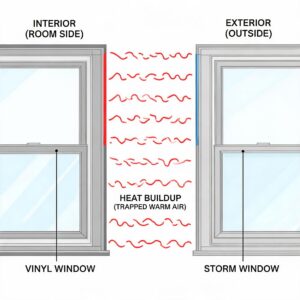
- Interior applications or storm windows
Where black vinyl windows pose risks:
- South and west-facing exposures in warm climates
- Homes in desert regions or areas with intense summer sun
- Windows without external shading devices
- Large picture windows or fixed panes that absorb maximum solar radiation
The fundamental issue is physics. Black surfaces absorb up to 90% of visible light and convert it to heat. Vinyl, as a thermoplastic material, softens and expands when heated. When a black vinyl window frame reaches temperatures of 160°F or higher—which is common on a sunny summer afternoon—the material can begin to deform.
We’ve seen black vinyl windows bow outward, develop gaps at the corners, and even separate from the glass entirely. These failures aren’t manufacturing defects; they’re material limitations.
For homeowners who want the black window look without these risks, exploring custom black uPVC window suppliers who use reinforced profiles or composite materials is a smarter approach.
Do Black Vinyl Windows Fade?
Fading is a legitimate concern, but it’s not the only cosmetic issue with black vinyl windows.
Common cosmetic failures in black vinyl windows:
- Color fading: UV radiation breaks down the pigments in vinyl, causing the black to turn gray or chalky over time
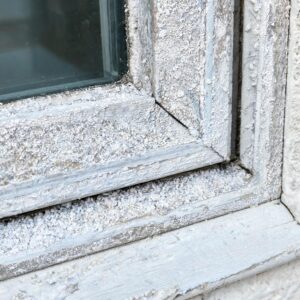
- Chalking: A white powder forms on the surface as the vinyl degrades
- Blistering: Trapped moisture beneath painted surfaces creates bubbles
- Peeling: Laminated or painted finishes can separate from the base material
- Yellowing: Some black vinyl formulations develop a brownish or yellowish tint with UV exposure
The warranty on black vinyl windows is typically shorter than on white versions for this reason. Many manufacturers offer 20-year warranties on white vinyl but only 10 years on dark colors. Some limit color-fade warranties to just 5 years.
How manufacturers address fading:
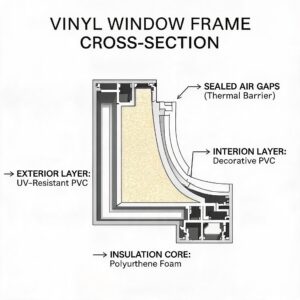
- UV stabilizers and absorbers added to the vinyl compound
- Acrylic capstocks applied as a protective outer layer
- Ceramic-based pigments that resist UV degradation
- Multi-layer paint systems with UV-blocking clear coats
Even with these measures, no black vinyl window is truly fade-proof. The best you can hope for is slow, uniform fading that’s less noticeable than patchy discoloration.
The Science Behind Black Window Frame Performance
Understanding why some black windows fail while others succeed requires a brief look at material science.
Coefficient of Thermal Expansion (CTE)
Every material expands and contracts with temperature changes. Vinyl has a relatively high CTE, meaning it expands significantly when heated. A black vinyl window frame can expand by 1/8 inch or more on a hot day. This expansion puts stress on the glass, the seals, and the frame joints.
Composite materials like Fibrex (a wood fiber and polymer blend) have a much lower CTE, closer to wood. This means they maintain their dimensions better under temperature extremes.
Heat Deflection Temperature
This is the temperature at which a material begins to soften and deform under load. Standard vinyl has a heat deflection temperature around 150°F. Black vinyl frames in direct sun can easily exceed this temperature. Reinforced vinyl or composite materials can have heat deflection temperatures above 180°F.
UV Resistance
Vinyl degrades under UV exposure through a process called photodegradation. The polymer chains break down, causing the material to become brittle and chalky. UV stabilizers slow this process but don’t stop it entirely. Composite materials with wood fibers or mineral fillers tend to have better inherent UV resistance.
Comparing Black Window Materials
| 材料 | Heat Resistance | Fade Resistance | 实力 | 费用 | 保修 |
|---|---|---|---|---|---|
| Standard Vinyl | 低 | 低 | 中度 | $ | 5-10 years |
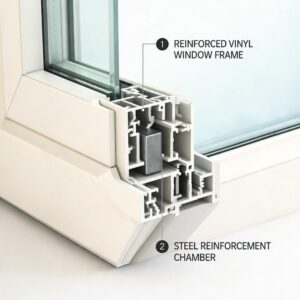
| Reinforced Vinyl | 中度 | 中度 | Good | $$ | 10-15 years |
| 玻璃纤维 | 高 | 高 | 优秀 | $$$ | 20-30 years |
| 铝质 | 高 | 高 | 优秀 | $$$ | 20-30 years |
| 木材 | 中度 | 中度 | Good | $$$ | 15-25 years |
| Composite (Fibrex) | 高 | 高 | 优秀 | $$ | 20-30 years |
For homeowners who prioritize longevity and performance, composite or fiberglass windows offer the best balance of durability and aesthetics. If budget is the primary concern, reinforced vinyl from a reputable manufacturer can work in moderate climates.
Installation Considerations for Black Windows
Black windows require more careful installation than white windows for several reasons:
Thermal bridging: Black frames absorb more heat, which can transfer to the interior of your home. Proper insulation around the frame is essential.
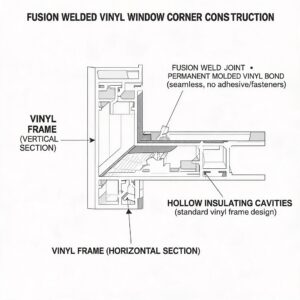
Expansion gaps: Installers must account for greater thermal expansion in black frames. This means slightly larger gaps around the window that must be properly sealed.
Shading: Black windows perform best when they receive some shading during the hottest part of the day. Consider exterior shading solutions like awnings, overhangs, or solar screens.
Orientation: South and west-facing windows receive the most intense sun. If you’re installing black windows on these exposures, choose a material with proven heat resistance.
Maintenance Requirements for Black Windows
Black windows show dirt, dust, and water spots more readily than white or lighter colors. Regular cleaning is essential to maintain their appearance.
Cleaning recommendations:
- Use mild soap and water only
- Avoid abrasive cleaners that can scratch the finish
- Rinse thoroughly to prevent soap residue
- Clean in the morning or evening when the frame is cool
- Never use pressure washers on black vinyl frames
Inspection checklist:
- Check seals and gaskets annually for signs of heat damage
- Look for gaps at corners or joints
- Monitor for chalking or fading on south-facing exposures
- Test window operation seasonally to ensure smooth movement
Long-Term Value Assessment
When evaluating black windows as an investment, consider the full lifecycle cost:
Initial cost: Black windows cost 20-50% more than white equivalents
Energy impact: Black frames absorb heat, potentially increasing cooling costs in summer. However, in cold climates, this same property can provide slight heating benefits in winter.
Maintenance costs: Black windows require more frequent cleaning and may need refinishing sooner than white windows
Replacement timeline: A quality black composite window might last 30 years, while a budget black vinyl window might need replacement in 10-15 years
Resale value: Black windows are currently trendy, which means they may appeal to buyers now but could feel dated in 15-20 years. Neutral colors have more timeless appeal.
For homeowners seeking black vinyl windows with black hardware, the total package cost can be significant. Matching hardware finishes add another premium, but the cohesive look is worth it for many homeowners.
为您的房屋做出正确的选择
After analyzing hundreds of black window installations across different climates, here’s our manufacturer’s recommendation:
Choose black composite or fiberglass windows if:
- You live in a warm climate (zones 7-10)
- Your windows face south or west
- You want minimal maintenance over 20+ years
- You’re willing to invest more upfront for long-term reliability
Choose black vinyl windows if:
- You live in a cool climate (zones 1-4)
- Your windows are north-facing or shaded
- You’re on a tight budget
- You plan to sell the home within 5-10 years
Avoid black windows entirely if:
- You live in a desert climate with intense year-round sun
- Your home has no exterior shading
- You want windows that will look perfect for 30+ years
常见问题
Q: Do black vinyl windows get hotter than white ones?
Yes, significantly. Black surfaces absorb up to 90% of solar radiation, while white reflects most of it. On a 90°F day, a black vinyl window frame can reach 160°F or higher, while a white frame might stay below 120°F.
Q: Can black vinyl windows be painted if they fade?
Yes, but it’s not recommended. Painting vinyl windows requires specialized primers and paints designed for flexible substrates. The paint may peel or blister, especially on dark colors that absorb more heat. Professional refinishing is possible but costly.
Q: Are black windows more energy efficient?
Not inherently. The color of the frame has minimal impact on the window’s overall energy efficiency. The glass type, gas fill, and spacer system matter far more. However, black frames can increase heat gain in summer, potentially raising cooling costs.
Q: How long do black vinyl windows typically last?
Budget black vinyl windows may show significant fading and degradation within 5-10 years. Premium black vinyl windows with UV stabilizers can last 15-20 years. Composite black windows often last 25-30 years with proper maintenance.
Q: Do black windows require special glass?
No, but low-E glass coatings are especially important with black frames. The low-E coating reflects heat while allowing light to pass through, reducing the thermal load on the frame. Double or triple glazing also helps manage heat transfer.
Q: Can I get black windows with black screens?
Yes, many manufacturers offer black insect screens that match black window frames. These screens are less visible from the outside and provide a cleaner appearance. They typically cost 10-20% more than standard screens.
Q: Are black windows harder to install?
Yes, because installers must account for greater thermal expansion. Proper shimming, sealing, and insulation are critical. Always hire an installer with specific experience installing dark-colored windows.
Q: What’s the best alternative to black vinyl windows?
For the same modern look with better performance, consider black fiberglass windows or composite windows like Andersen’s Fibrex material. These materials handle heat better, resist fading longer, and provide superior structural strength.